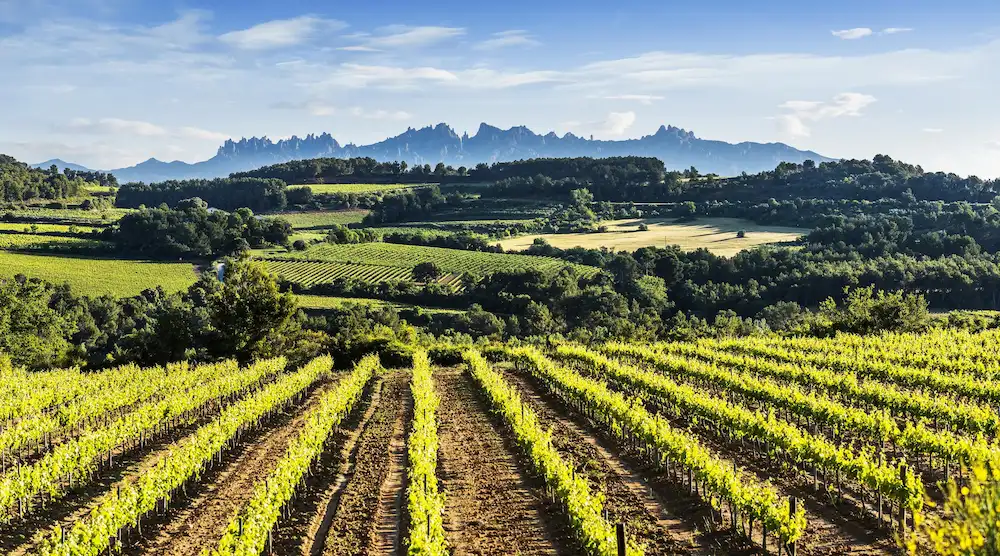
Just a short train ride from Barcelona, nestled between the glittering Mediterranean and the shadow of Montserrat, lies one of Spain’s most quietly fascinating wine regions: DO Penedès.
It may not have the swagger of Rioja or the drama of Priorat, but what Penedès offers is something even better — diversity, authenticity, and approachability. This is the region that gave birth to Cava. But it’s also the land of Xarel·lo whites, old-vine reds, organic rebels, and slow-travel wine tourism.
With vineyards stretching from sea level to mountain heights, and wineries ranging from massive producers to experimental microcellars, Penedès is a wine region you can taste, walk, and fall in love with. Whether you’re here for the bubbles or the backroads, this guide will help you sip your way through the real Catalonia.

Penedès Fast Facts
Region Name: D.O. Penedès
Location: Catalonia, northeast Spain — nestled between Barcelona and Tarragona, stretching inland from the Mediterranean coast to the mountains
Famous for: Cava (Spain’s answer to Champagne), as well as high-quality still whites and increasingly impressive reds
Main grapes:
-
Whites: Xarel·lo, Macabeu, Parellada, Chardonnay, Sauvignon Blanc
-
Reds: Garnacha, Tempranillo, Sumoll, Syrah, Cabernet Sauvignon, Merlot
Climate: Mediterranean — hot, dry summers, mild winters, with coastal and high-altitude microclimates
Altitude range: Sea level to over 800m — which means everything from breezy coastal wines to crisp, high-altitude whites
Innovation zone: Penedès is one of Spain’s most forward-thinking DOs — organic wine leaders, experimental white blends, amphora ferments, and low-intervention fizz
Home of: Corpinnat (a breakaway group of top cava producers), Clàssic Penedès (another fizz-focused movement), and plenty of rebel winemakers doing their own thing
Style vibe: Lively, bright, often bone dry — with a balance of tradition (Cava houses) and boundary-pushing (natural/organic microproducers)
Tourism scene: Wine trains, bike routes, rustic wineries with seaside views, and quick access from Barcelona (just 40–60 mins by train)
Serving tip: Many whites and sparklings taste best at 6–10°C. Give reds a light chill in summer — especially Garnacha or Sumoll.
Where Is DO Penedès?
DO Penedès stretches across a sun-drenched slice of Catalonia, nestled between the Mediterranean Sea to the east and the mountains of Montserrat to the northwest. It lies roughly halfway between Barcelona and Tarragona, making it one of the most accessible wine regions in Spain — just 45 minutes by train from Barcelona’s city centre.
But this isn’t just one flat, homogenous wine belt. Penedès is divided into three distinct altitude zones, each with its own personality:
-
Baix Penedès (Low Penedès): Closest to the coast. Warmer, drier, and ideal for earlier-ripening grapes like Macabeo, Chardonnay, and Parellada.
-
Mitja Penedès (Central/Mid Penedès): Rolling hills, clay-limestone soils, and the heartland of Xarel·lo. This is where much of the region’s quality white wine and Cava is born.
-
Alt Penedès (High Penedès): Up in the mountains at altitudes above 500 metres. Cooler nights and greater elevation give freshness to both white and red grapes, including lesser-known varieties like Sumoll.
This diversity of landscapes and microclimates means Penedès can grow a ridiculous number of grape varieties — over 30 are authorised — and produce wines that range from light and citrusy to bold and structured.
For visitors, the beauty is in the contrast. In one day, you can:
-
Walk through Mediterranean vineyards framed by olive trees
-
Taste minerally Xarel·lo in a hillside cellar
-
Tour historic Cava caves in Sant Sadurní
-
And still be back in Barcelona for sunset
A Short History of Penedès Wine
Wine in Penedès isn’t new — it’s ancient. Vines have been growing here since at least Roman times, and likely even earlier under Iberian tribes. Amphora shards and archaeological sites near Vilafranca del Penedès confirm that this corner of Catalonia has been fermenting grapes for over 2,000 years.
From Monasteries to Markets
In the Middle Ages, local monasteries played a key role in preserving and refining winemaking traditions, producing wine for religious use and feudal elites. By the 15th century, wine from the Penedès was being traded across the Mediterranean, carried out of Barcelona’s port in clay jugs and barrels.
The Phylloxera Pivot
Like much of Europe, Penedès was devastated by the phylloxera plague in the late 1800s — a tiny American insect that wiped out vineyards across the continent. But from that destruction came transformation: many local producers replanted with white grape varieties, and some — inspired by French Champagne — began experimenting with bottle-fermented sparkling wine.
This innovation gave birth to Cava, with the first bottles credited to Josep Raventós of Codorníu in 1872. Over time, Cava became the engine that powered the region’s wine economy.
From Bulk to Boutique
During the 20th century, much of Penedès wine was made in bulk for domestic consumption. But in the 1970s–90s, a new generation of winemakers began pushing for quality, terroir, and organic farming. They embraced native grapes like Xarel·lo and Sumoll, and turned their backs on overproduced international styles.
In 1960, DO Penedès was formally recognised, with its own Consejo Regulador to oversee quality. And in recent decades, it has become a leading region in Spain’s organic wine movement, with more and more producers farming sustainably, fermenting naturally, and bottling wines that express the land as much as the grape.
Today, Penedès is a region where tradition and experimentation live side by side — old vines, new ideas, and some of Spain’s most exciting wines.
What Wines Come From DO Penedès?
While Penedès is best known internationally as the home of Cava, it’s also one of Spain’s most diverse and experimental wine regions. With over 30 authorised grape varieties and a full spectrum of altitudes and microclimates, Penedès produces everything from crisp white wines to funky naturals to age-worthy reds.
White Wines: Xarel·lo Leads the Charge
If there’s one grape to know in Penedès, it’s Xarel·lo. Long treated as just a workhorse for Cava blends, this native variety is now the darling of still white wines. It brings minerality, freshness, and a kind of herbal, salty kick that screams Mediterranean.
You’ll also find:
-
Macabeo (Viura) – softer, fruitier whites
-
Parellada – delicate and floral, grown at higher altitudes
-
Chardonnay and Sauvignon Blanc – often blended with native varieties or made solo in modern styles
Look out for oak-aged Xarel·lo or even skin-contact versions. These wines are serious, structured, and incredibly food-friendly, often compared to top-tier whites from Burgundy or northern Italy.
Red Wines: Native and Noble
While white wine dominates, Penedès reds are on the rise, especially in cooler, higher-altitude zones.
Grapes to know:
-
Sumoll – a rustic, high-acid native red being revived by natural winemakers
-
Garnacha (Grenache) – juicy, bright, and often used in blends
-
Tempranillo – called Ull de Llebre locally, used in traditional and modern styles
-
Cabernet Sauvignon & Merlot – international varieties planted widely in the 20th century; still found in bigger, oak-aged reds
The reds range from light and chillable to bold and structured, depending on the grape and the winemaker’s philosophy.
Sparkling Wines: Beyond DO Cava
While most Cava comes from within Penedès, not all sparkling wines made here carry the DO Cava label. Some producers have left the DO entirely to form stricter quality groups like:
-
Corpinnat – Organic, hand-harvested, long-aged sparkling wines from within Penedès. Serious, terroir-driven fizz.
-
Clàssic Penedès – A smaller, regional sparkling designation focused on organic grapes and full traceability.
These wines often age longer, farm cleaner, and express their vineyard origins more clearly than mass-market Cava.
Natural & Organic Wines
Penedès is one of Spain’s leaders in organic viticulture. A growing number of producers — especially small family-run cellars — are making wines with minimal intervention, wild ferments, and no added sulphur.
If you’re into pet-nats, unfiltered Xarel·lo, or wild rosés that taste like summer in a bottle, this is the region for you.
Visiting the Penedès Wine Region
Penedès isn’t just for drinking — it’s for exploring. With postcard-perfect vineyards, charming towns, and a laid-back, locals-first vibe, this is one of the best wine regions in Europe for people who want their wine with a side of story and scenery.
Where to Base Yourself
-
Vilafranca del Penedès – The commercial and cultural centre of the region. Great for local markets, restaurants, and easy access to wineries. Home to the VINSEUM (Catalonia’s wine museum).
-
Sant Sadurní d’Anoia – The Cava capital. Full of underground cellars, grand Cava houses, and family-run producers.
-
Subirats & Sant Pau d’Ordal – Small countryside villages with spectacular views, boutique wineries, and vineyard trails.
- Barcelona – and take the easy, cheap, short and frequent public transport that links Penedès to its capital city
What to Do in Penedès (Besides Drink Wine)
-
Join a guided wine walk – Yes, including ours. Swallow Don’t Spit runs multi-day Camino de Vino-style walks through vineyard landscapes, connecting wineries and villages with stories, tastings, and boozy feasts.
- Bike through the vineyards – There are dedicated routes for casual cyclists and e-bike options for those who prefer sipping to sweating. We also run bike tours through the Penedès vineyards.
-
Hop on a train to Cava country – Just 45 minutes from Barcelona, Sant Sadurní is perfect for a half-day sparkling wine escape — like our Scenic Hike & Cava Experience, which follows an ancient Roman road through the vines, ending with a winery visit and Catalan feast.
-
Taste with a view – Many wineries now offer rooftop tastings, food pairings, and vineyard picnics.
-
Explore local food – Try escalivada, butifarra, or coca de recapte alongside local wine in rustic eateries. Wine in Penedès doesn’t just pair with food — it grows up with it.
When to Visit Penedès
-
Spring (April–June) – Everything is green and alive. Ideal for walks, picnics, and rosé.
-
Autumn (September–October) – Harvest season! Grapes everywhere, cellar doors open, and the best time to catch wineries at full buzz.
-
Year-round – Thanks to a Mediterranean climate, Penedès stays sunny and visitable almost all year. Just avoid August if you don’t like heat or things being closed.
Why Wine Tourism Here Works
Unlike bigger, flashier regions, Penedès keeps things personal. You’re more likely to meet the winemaker than a tour guide. Tastings aren’t rushed. And most wineries are small enough to care, big enough to impress. It’s that sweet spot between humble and world-class.
Final Sip: Why You Should Visit Penedès
Penedès isn’t polished for tourists — and that’s exactly why it’s perfect. This is a region where wine is a way of life, not a marketing strategy. The vines are old, the winemakers are curious, and the pace is slow enough to savour. It’s a place where you can clink glasses with the people who made the wine, wander through vineyards that have been worked for generations, and still make it back to Barcelona for a sunset swim.
Here, you don’t need a sommelier or a spreadsheet of tasting notes. You just need a good pair of shoes, an open mind, and maybe someone to drive you home.
So if you want to go beyond the bubbles, beyond the guidebooks, and into the real heart of Catalan wine — DO Penedès is your next adventure. And if you want someone to show you the way, well… we know a couple of legends who run wine hikes, cava experiences, and vineyard feasts out this way.
Book a tasting, lace up your boots, and come thirsty.
Common Myths About Penedès Wine
Myth 1: Penedès is just about Cava
Cava may be the region’s calling card, but Penedès is so much more. It’s home to some of Spain’s best still whites (especially Xarel·lo-based wines), and reds from native grapes like Sumoll and international varieties are gaining serious traction.
Myth 2: Cava is cheap, so it must be low quality
Penedès is producing some of the most complex and age-worthy sparkling wines in Spain — especially from the Corpinnat and Clàssic Penedès producers who have ditched the mass-market model in favour of terroir-driven, organic fizz. Cava can be cheap and cheerful, sure — but it can also rival Champagne.
Myth 3: It’s all big, commercial producers
Sure, Freixenet and Codorníu call it home, but dig a little deeper and you’ll find small, family-run wineries working with native grapes, biodynamic methods, and seriously cool styles — from orange wines to pet-nats.
Myth 4: It’s too close to Barcelona to be authentic
The proximity is a bonus, not a red flag. Being easy to reach doesn’t mean it’s touristy — Penedès is still full of sleepy villages, old-school farmers, and off-grid cellars. You just get to enjoy them without a four-hour drive.
Myth 5: You’ve already tried Penedès wine without realising it
If you’ve had a glass of Cava, chances are it was made in Penedès — around 95% of Cava production happens here. But don’t stop there. The still wines and experimental labels are where Penedès really flexes its creativity.
-
Cycle & Sip: Wine Tasting Adventure Through the Penedès Vineyards
-
Penedès: The Roman Road to Bubbles, A Cava-Fueled Hike Through Vineyards