
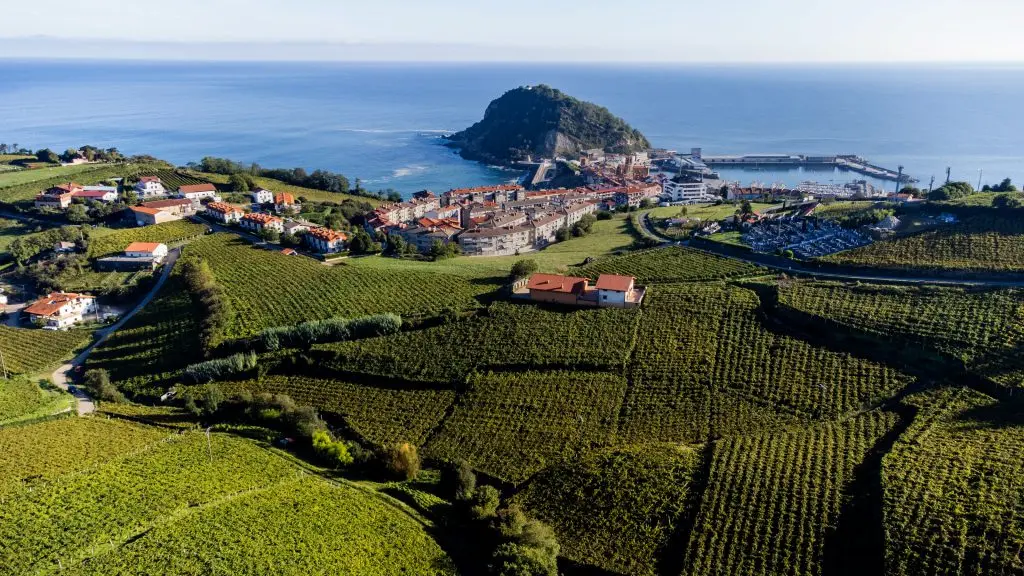
Txakoli is both a wine region and the grape that grows there. For the Txakoli grape guide, head here.
The Basque Country doesn’t just flirt with nature — it lets the wild in. Green hills roll into jagged mountains, sea spray clings to the cliffs, and the Atlantic doesn’t just crash, it roars. And right there, tucked into this lush, briny chaos, are vines. Vines that grow on near-impossible slopes. Vines that taste the salt in the air. Vines that make one of Spain’s most distinctive wines — Txakoli.
This is not your average wine region, and Txakoli is not your average wine. It’s sharp. It’s zippy. It’s got bite and breeze and sometimes a cheeky bit of fizz. But to really understand Txakoli — to feel it — you need to see where it comes from. You need to walk the hills, sip it by the sea, and elbow your way into a pintxos bar where the glasses are small, but the flavours are huge.
Txakoli isn’t a drink — it’s a way of life. A living gastronomy that ties land to glass, and glass to plate. It’s fish just off the boat, anchovies that bite back, and peppers grilled until they squeal. It’s laughter bouncing off plaza walls and a pour that starts at head height and ends with a smirk. And behind it all? Centuries of quiet, proud winemaking.
This guide is for the curious — the wine lovers who want to go beyond Rioja and Rías Baixas. It’s for the wanderers who want to taste a landscape. And it’s for anyone who’s ever dreamed of chasing a glass of wine up a green hill, down a cobbled street, and into a seaside sunset.
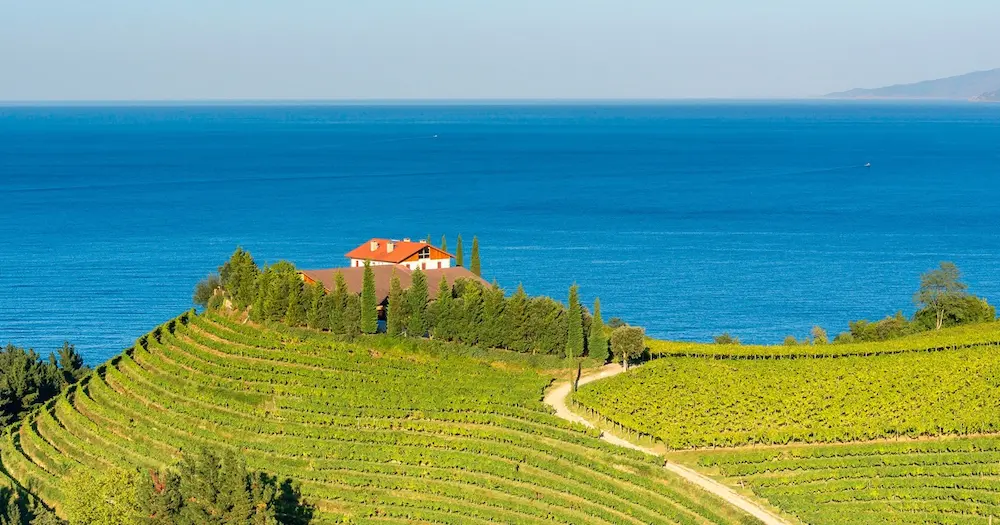
What is DO Txakoli?
DO Txakoli isn’t just one region — it’s three. Scattered across the Basque Country, each Denominación de Origen (DO) makes its own expression of Txakoli, shaped by its slice of coastline or mountain range. But what ties them together is a shared attitude: local grapes, steep hillsides, Atlantic mist, and a refusal to make wine that plays by anyone else’s rules.
DO Getariako Txakolina (Getaria)
The OG. The cliff-hanger. The salty superstar.
Getariako Txakolina (DO since 1989) is the birthplace of modern Txakoli and the most famous of the three. Its vineyards tumble toward the Bay of Biscay around Getaria and Zarautz — if the sea breeze doesn’t hit you, the rain probably will. These are some of the steepest, greenest, most ocean-kissed vineyards in Spain.
-
Signature style: Very light, super fresh, with signature spritz and a mouth-watering salinity.
-
Grape of choice: Almost exclusively Hondarrabi Zuri.
-
What to expect: That classic Txakoli buzz — electric acidity, barely-there bubbles, and citrusy sharpness that screams for seafood.
-
Don’t miss: A glass poured from a height in a seaside pintxos bar. Ideally with grilled turbot or anchovies from nearby Mutriku.
DO Bizkaiko Txakolina (Bizkaia)
The quiet rebel. The mountain whisperer.
This inland, slightly warmer zone near Bilbao and the hills of the Encartaciones region offers a broader palette. The vineyards are a bit more protected, the wines a bit rounder — but still very much Txakoli at heart.
-
Signature style: A touch fuller, sometimes still instead of fizzy. Citrus and green apple still dominate, but you might get stone fruit or floral hints too.
-
Grapes in play: Hondarrabi Zuri, Hondarrabi Zerratia (aka Petit Courbu), and some rare reds like Hondarrabi Beltza.
-
What to expect: A refined, less coastal take on Txakoli, often with a bit more body and complexity.
-
Don’t miss: A visit to the tiny villages where the locals drink what they grow — often before it even hits the label.
DO Arabako Txakolina (Álava)
The mountain-grown outlier with Rioja as its neighbour.
Arabako Txakolina is the youngest and smallest of the three DOs, but don’t let that fool you — it packs a punch. Nestled inland in Álava, right next to Rioja Alavesa, these vineyards are planted at altitude, often above 400 metres.
-
Signature style: Lean and mineral-driven, with higher acidity and less coastal influence. Less fizzy than Getaria, more structured than Bizkaia.
-
What grows here: Hondarrabi Zuri leads the charge, but you’ll also find some experimental bottlings — look out for barrel-aged or natural-style wines from the new guard.
-
What to expect: Wines that channel mountain air more than sea salt. Great with cured meats and hard cheeses.
-
Don’t miss: Visiting a winery on a cool, misty day. It’s Txakoli’s quiet side, but no less beautiful.
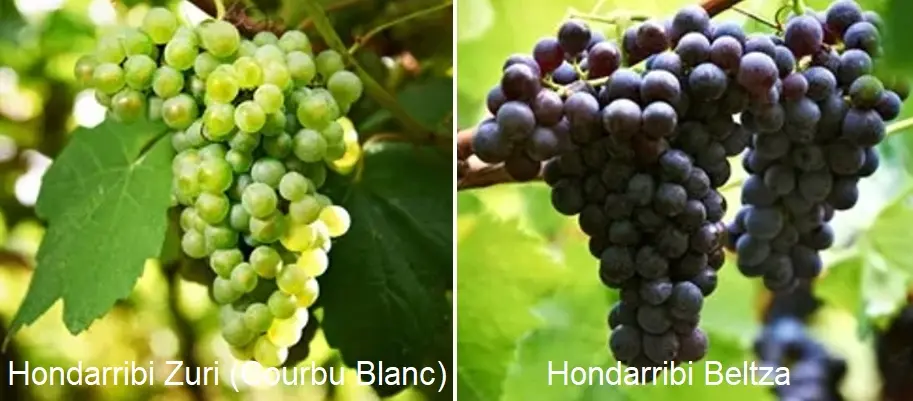
The Grapes Behind Txakoli
Hondarrabi Zuri: The Zesty Star of the Show
If Txakoli had a heartbeat, it would be Hondarrabi Zuri. Despite the name — which loosely means “white from Hondarribia” — this grape has many aliases and a somewhat murky lineage. Some claim it’s a local clone of Courbu Blanc or even Crouchen, but here in the Basque Country, it’s taken on a life of its own.
-
What it brings: Razor-sharp acidity, low alcohol, a steely backbone, and that trademark citrus-and-saline combo. Think lemon zest, underripe green melon, wild herbs, and Atlantic sea spray.
-
In the vineyard: Finicky to grow and fussy about ripeness, but worth it for that bright, nervy energy.
-
In the glass: Always refreshing, rarely oaked, and typically finished with a spritz. The kind of wine that makes your mouth water before it hits your lips.
Hondarrabi Beltza: The Rare Red Rebel
You don’t see a lot of Hondarrabi Beltza — and that’s what makes it exciting. This red-skinned cousin of Zuri (possibly related to Cabernet Franc) is grown in small quantities, often co-planted or blended with white grapes, but gaining ground among new-generation winemakers.
-
What it brings: Aromatic reds with crunchy red berry flavours, fresh acidity, low tannins, and a whisper of smoke or spice.
-
Where to find it: Most common in Bizkaiko and Arabako Txakolina, though some Getaria producers are experimenting too.
-
What it pairs with: Lightly chilled, it’s heaven with grilled tuna, jamón ibérico, or anything from the asador.
Hondarrabi Zerratia: The Elegant Underdog
Often used as a blending partner, Hondarrabi Zerratia (also known as Petit Courbu in France) is quietly elevating many Txakolis — especially in Bizkaia.
-
What it brings: A softer texture, subtle floral notes, and sometimes a hint of exotic fruit — think pear blossom and peach skin.
-
Why it matters: It rounds out the sharper edges of Zuri, giving balance and depth without stealing the spotlight.
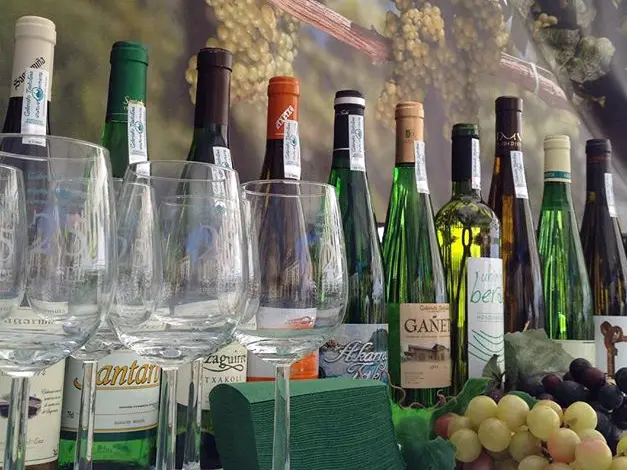
What wines should you seek out from Txakoli DOs?
If you’ve made it this far, you’re probably already daydreaming of a crisp, salty white in your hand while waves crash nearby. But if you’re nowhere near the Basque Country, don’t worry — Txakoli is increasingly available around the world. Here’s how to seek out the best bottles and understand what you’re getting, whether you’re browsing a local wine shop, scanning a restaurant list, or visiting the region in person.
Getariako Txakolina (Txakoli de Getaria): The Classic Coast
This is the OG. The place where the spritzy, sea-splashed style of Txakoli first gained fame.
-
What it tastes like: Light-bodied, electric with acidity, and almost salty from proximity to the Atlantic. Most wines are naturally pétillant (a slight fizz) and meant to be drunk young.
-
What to look for:
-
Vintage whites — typically Hondarrabi Zuri, bottled young and fresh.
-
Rosado or rosé styles — made with Hondarrabi Beltza or a blend, gaining popularity for summer sipping.
-
Producers to try: Ameztoi (their “Rubentis” rosé is a cult favourite), Txomin Etxaniz, K5 Argiñano.
-
-
Outside Spain: Ameztoi is widely exported and easy to find in wine-forward shops in the US, UK, and Australia. Look for the distinctive green bottles and screw cap.
Bizkaiko Txakolina: Innovation Meets Terroir
Bizkaia has taken the traditional Txakoli playbook and added a few unexpected chapters.
-
What it tastes like: A touch rounder, with more structure and weight. You’ll find more diversity in style here — from crisp to creamy.
-
What to look for:
-
Wines made with Hondarrabi Zuri Zerratia (a local clone of Petit Courbu) or Petit Manseng.
-
Wines aged on lees (for texture) or even in oak (rare, but emerging).
-
Producers to try: Itsasmendi, Gorka Izagirre, Doniene Gorrondona.
-
-
Outside Spain: Less widely exported than Getaria’s Txakoli, but some bottles from Gorka Izagirre and Itsasmendi can be found in specialised importers or Basque restaurants abroad.
Arabako Txakolina (Txakoli de Álava): The Underdog with Altitude
The youngest and smallest DO, Arabako Txakolina brings an inland sensibility to a coastal tradition.
-
What it tastes like: Often drier, more mineral, and slightly fuller-bodied. You get less of the saline fizz, and more structure — think “serious Txakoli.”
-
What to look for:
-
Single-vineyard bottlings at altitude.
-
Wines with restrained fizz and more savoury character.
-
Producers to try: Bat Gara, Artomaña Txakolina (maker of “Xarmant”).
-
-
Outside Spain: Rare to find on export lists, but worth seeking out if you stumble on a bottle. Ask importers or natural wine shops for Basque wines from Álava.
How to spot good value Txakoli (in Spain and beyond)
Txakoli is generally affordable, but prices can vary wildly depending on where and how it’s made. Here’s how to drink well without overspending:
-
In Spain: Great bottles often retail for €8–15. At this range, look for producers from Bizkaia or Getaria, and lean into rosado or lees-aged styles for something extra.
-
Outside Spain: Expect USD $20–30 / AUD $30–45 / GBP £18–25. Ameztoi’s Rubentis and Txomin Etxaniz are safe bets if the selection is limited.
-
Avoid: Bottles without producer info or vague “Txakoli” labels — especially if they’re unusually cheap or old vintages. Freshness is everything.
-
Pro tip: If the bottle is green, slightly fizzy, and under screw cap — you’re probably in good hands.
Visiting Txakoli Country: Travel Tips, Culture & Wine-Soaked Adventures
Welcome to the Basque Country — where wine isn’t just something you drink, it’s something you live. Here, meals aren’t complete without a few bites on a bar top and a glass of something local. Where the ocean crashes, the mountains loom, and the hills roll with impossibly green vineyards. This is Txakoli country — and it’s begging to be explored.
The Coastline: Getaria, Zarautz & Hondarribia
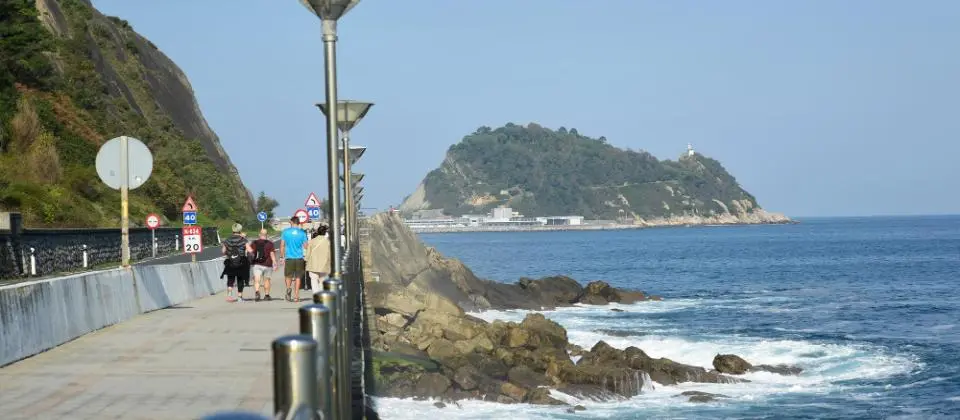
Start your pilgrimage in Getaria, a postcard-perfect fishing village and the heartland of Getariako Txakolina. It’s the kind of place where you can sip a glass of Ameztoi’s rosé with grilled turbot fresh off the boat — and then tumble into the Atlantic surf.
-
Don’t miss:
-
Elkano: A Michelin-starred seafood temple famous for whole grilled fish and perfectly paired Txakoli.
-
Txomin Etxaniz: A hilltop winery with sea views and the full Txakoli experience.
-
Zarautz Beach: Surf, sunbathe, then snack on pintxos with a glass of something fizzy and local.
-
Nearby, Hondarribia offers a more polished charm — cobblestoned streets, colourful buildings, and one of the best pintxos scenes in the Basque Country.
-
Where to sip: Hiruzta Bodega — modern, award-winning, and just minutes from the French border.
Bilbao & Bizkaia: City Meets Countryside
Bilbao is no longer the gritty industrial port it once was. It’s now a hub of art, food and — yes — wine. The city makes the perfect base to explore Bizkaiko Txakolina, the most innovative of the three DOs.
-
In the city:
-
Eat at Gure Toki in Plaza Nueva for next-level pintxos.
-
Drink at El Puertito — Spain’s first oyster bar — and pair briny bivalves with something local and zippy.
-
-
In the hills:
-
Visit Gorka Izagirre, which doubles as a winery and a base for Michelin-starred Nerua.
-
Head to Doniene Gorrondona for a sea-meets-mountain winery perched above the town of Bakio.
-
Álava: Inland Escapes, Intimate Wineries
Far from the crashing waves, Arabako Txakolina brings a more rustic, grounded vibe. This is a land of gentle slopes and quiet villages, where Txakoli leans more mineral and serious.
-
Visit: Bat Gara near Amurrio, where the wines reflect a deep respect for biodiversity and ancestral techniques.
-
Stay: In charming agriturismos or small family-run inns, where local food and wine are always within arm’s reach.
This is also the perfect detour if you’re visiting Rioja Alavesa — meaning you can go from bold reds to zippy whites in one day.
Festivals & Seasonal Highlights
-
January to April: Best time to taste freshly bottled vintage Txakoli.
-
Summer: Ideal for coastal road trips, beach stops, and winery visits. Book ahead — it’s busy.
-
Harvest (Sept–Oct): Some wineries open their doors for grape picking experiences.
-
Local tip: Ask around for village fiestas — from small patron saint festivals to seafood celebrations, you’ll never be short of grilled sardines and flowing Txakoli.
Camino de Vino: Our Txakoli Adventure
Parts of our Camino de Vino walking experiences will soon make their way through this very region. Imagine walking clifftop trails between villages, ending the day with a cold glass of Txakoli and a table of seafood, friends, and Basque hospitality. Watch this space.
Camino de Vino: Txakoli Adventure Itinerary
Night One: Arrival in San Sebastián
Arrive in the Basque Country’s culinary capital. We’ll meet for a traditional sidrería dinner — think long tables, grilled txuleta, and cider straight from the barrel. It’s a raucous, authentic welcome to the region and a perfect palate prepper for what’s to come.
Day One: Hike Hondarribia to San Sebastián – Seaside Paths & Pintxos
Distance: ~22 km | Moderate | ~6 hours walking
-
Morning: Leave bags in San Sebastián accommodation, then transfer to Hondarribia — a storybook border town with colourful Basque houses and serious culinary chops. Optional stop at Hiruzta Txakolina for our first txakoli tasting and vineyard intro.
-
Hike: Follow the Camino del Norte coastal trail through pine forests, cliffs, and quiet fishing towns like Pasaia, where we stop for lunch by the waterfront.
-
Afternoon: Walk into San Sebastián via Mount Ulia for one of the most breathtaking urban arrivals on any Camino.
-
Evening: Pintxo crawl and a curated txakoli tasting in the old town.
Day Two: Hike San Sebastián to Zarautz – Surf, Vines & Views
Distance: ~22 km | Moderate | ~6–7 hours walking
-
Morning: Leave bags in San Sebastián and set off west along the Camino. This stretch is pure sensory indulgence: forested hills, vineyard-covered slopes, cliff-top panoramas, and glimpses of surfers in hidden coves.
-
Lunch: Rustic pintxos or farmhouse lunch near Orio, where vineyards hug the hills.
-
Afternoon: Arrive in Zarautz, home to one of the longest beaches in the Basque Country and surrounded by txakoli producers.
-
Optional: Surf lesson or a chill afternoon on the sand.
-
Evening: Dinner with local wines and sea views.
Day Three: Walk to Getaria – Vineyards, Grills & Gastronomy
Distance: ~5 km | Easy | ~1.5 hours walking
-
Morning: Light hike to Getaria, a medieval port town and txakoli capital. Visit a top-tier txakoli bodega like Txomin Etxaniz or Ameztoi, perched high above the coast.
-
Lunch: Traditional seafood feast — grilled turbot and txakoli, the local match made in heaven.
-
Afternoon: Free time to explore: walk the port, visit the Cristóbal Balenciaga Museum, or climb Mount San Antón (El Ratón) for sweeping views and a sunset toast.
Day Four: Hike Zarautz to Zumaia – The Grand Finale
Distance: ~10 km | Moderate | ~3–4 hours walking
-
Morning: Follow the Camino through rolling vineyards and dramatic coastline to Zumaia, home of the world-famous flysch cliffs — massive stone slabs that crash into the sea like a Basque version of the Giant’s Causeway.
-
Lunch: Clifftop picnic or terrace dining in Zumaia town.
-
Optional Experiences:
-
Final winery visit: Elkano Txakolina or Talai Berri
-
A swim at Itzurun Beach, filming site for Game of Thrones
-
Visit the Algorri Interpretation Centre for those keen on geology and coastline lore
-
-
Afternoon: Return to Zarautz or San Sebastián via arranged transport. Final group drink. Cheers, you’ve done it.
Txakoli FAQs
What is Txakoli?
Txakoli (or Txakolina) is a lightly fizzy, high-acid white wine from the Basque Country, known for its green apple tang, coastal salinity, and low alcohol content. It’s made mostly from the Hondarrabi Zuri grape and is designed to be smashed back with seafood and pintxos.
Where is Txakoli made?
Txakoli is produced in three main DOs (Denominación de Origen) in northern Spain:
-
Getariako Txakolina (DO) – coastal, fresh, and lightly spritzy
-
Bizkaiko Txakolina (DO) – more inland, often richer and broader
-
Arabako Txakolina (DO) – the smallest, hilliest, and perhaps most experimental
Is Txakoli always white?
Nope! While most Txakoli is white, there are rosé (rosado) and red (tinto) versions made from Hondarrabi Beltza, a rare local red grape. If you spot one, grab it — it’s Basque, delicious, and hard to find.
Why is Txakoli slightly fizzy?
The fizz comes from bottling early, capturing CO₂ from fermentation. It’s not carbonated like soda — more of a gentle prickle that lifts the acidity and freshness.
Is it really poured from a height?
Yes, and not just for show. Pouring Txakoli from height (like a Basque waterfall) into wide glasses aerates the wine, enhances aromas, and kicks up the spritz. If you’re not making a mess, you’re not doing it right.
What does ‘Txakoli’ mean?
It likely comes from the Basque word etxeko ain, meaning “just enough for the home,” or possibly etxakoa, “from home.” It reflects the humble, homegrown roots of this regional wine.
What should I eat with Txakoli?
-
Seafood and shellfish – grilled octopus, prawns, anchovies
-
Pintxos – cured meats, olives, anchovy-stuffed peppers
-
Sushi and Asian food – acidity + salt = magic
-
Cheese – especially soft goat’s cheese or young Manchego
Can I find Txakoli outside of Spain?
Yes — look for bottles in specialty wine shops, Basque restaurants, or online retailers. Names like Txomin Etxaniz, Ameztoi, and Itsasmendi are solid bets. Pro tip: Getariako Txakoli often delivers the best freshness-for-your-buck ratio.
How do I serve Txakoli?
Serve it very cold, in a tumbler or white wine glass, poured from a bit of a height (if you dare). Don’t decant. Don’t age. Just chill, pour, and enjoy.
